
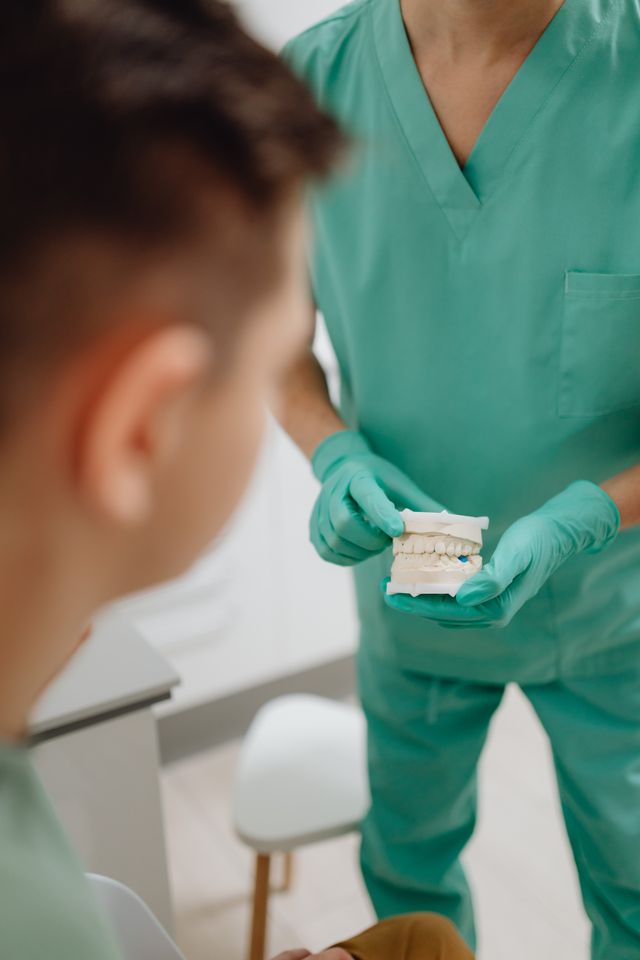
If your ClinCheck plan mentions 'IPR', here's exactly what it means, why your orthodontist recommends it, and what it feels like.
IPR — interproximal reduction — is the gentle removal of a very small amount of enamel from the sides of selected teeth to create room for them to line up. It's one of the most common steps in Invisalign treatment for crowded teeth, and it's often what allows us to avoid removing a tooth.
How Much Enamel Is Removed?
Typically 0.1mm to 0.5mm per contact point — less than the thickness of a credit card. Enamel on the sides of front teeth is usually 1–1.5mm thick, so IPR stays well within safe limits when planned precisely in ClinCheck.
How Is IPR Done?
Does IPR Hurt?
Most patients feel only vibration and pressure. Enamel has no nerves, so anaesthesia is rarely needed. Some people notice mild sensitivity to cold for a day or two.
Is IPR Safe Long-Term?
Research on properly performed IPR has not shown an increased risk of decay or gum disease. The key is precise, measured reduction and good polishing — which is why it should be done by an experienced provider following a digital plan.
| Space-creating method | When it's used |
|---|---|
| IPR | Mild to moderate crowding; reshaping triangular teeth |
| Arch expansion | Narrow arches, crossbites |
| Tipping front teeth forward slightly | Mild crowding with upright incisors |
| Extraction | Severe crowding or protrusion (minority of cases) |
IPR also reduces 'black triangles' — small dark gaps that can appear near the gumline when crowded triangular teeth are straightened.