
The iTero Element 3D scanner is one of the most significant advances in orthodontics of the last decade. Here's how it works, what it captures, and why it produces better Invisalign results than traditional impressions.
If you've heard of the iTero scanner and wondered what all the fuss is about — or if you're about to have your first scan and want to understand what's happening — this guide is for you. The technology is genuinely impressive, and it has real consequences for your treatment outcome.
What is the iTero Element 3D Scanner?
The iTero Element is a handheld intraoral scanner made by Align Technology — the same company that makes Invisalign. It uses a combination of optical coherence tomography and confocal microscopy to capture continuous 3D images of your teeth and gums as the wand moves through your mouth.
- Captures over 6,000 images per second
- Accuracy to within 40 micrometers (0.04 mm)
- Creates a full-arch 3D digital model in 3–5 minutes
- Completely radiation-free
- Images sent directly to Invisalign's manufacturing facility in the same session
Old Technology: Why Impressions Were a Problem
Before intraoral scanners, orthodontists used physical impressions — trays filled with alginate material pressed against your teeth and held for several minutes. The problems were significant:
- Gagging — a common trigger for patients with a sensitive gag reflex
- Inaccuracy — even small movements during the impression set time could distort the mould
- Lab time — impressions had to be cast, poured, and shipped to a lab — adding days
- Storage — physical models take up significant space and can degrade over time
- Re-impressions — distorted impressions had to be repeated, adding more appointments
How the iTero Scan Changes Everything
With the iTero, the entire data-capture step takes 4 minutes, produces a more accurate result, and is completely comfortable — even for patients with a strong gag reflex. The digital file is immediately available for review on screen, sent to Invisalign's lab the same day, and stored permanently in the cloud.
At The Dental Specialists, every iTero scan is reviewed by the treating orthodontist in real-time on a large screen. Patients can see their own teeth in 3D — often for the first time — and point out areas of concern.
The Outcome Simulator: Your Future Smile Today
The most exciting feature of the iTero for new patients is the Outcome Simulator. After the scan, our software takes your 3D tooth model and projects the expected final result after Invisalign treatment. You see your actual teeth — not a generic model — moved into alignment. The simulation is based on your specific tooth shapes, sizes, and positions.
How the Scan Improves Aligner Precision
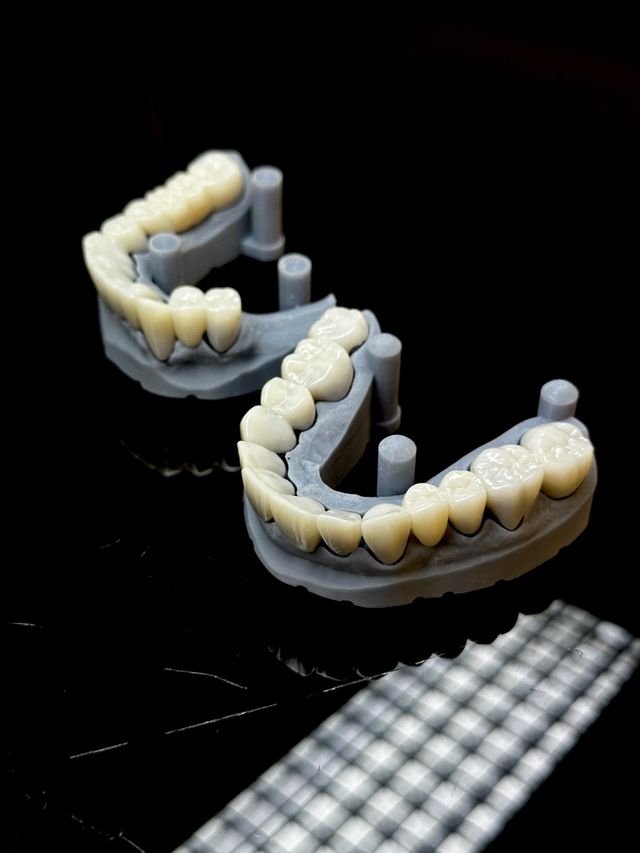
Invisalign aligners are thermoformed over 3D-printed models of your teeth. The accuracy of those models depends entirely on the accuracy of the scan. A 40-micrometer accurate digital scan produces a significantly more precise aligner than any physical impression could achieve — which means better tooth control, fewer refinements, and shorter overall treatment time.
| Factor | Physical Impression | iTero Scan |
|---|---|---|
| Accuracy | ±200–500 micrometers | ±40 micrometers (5–10× better) |
| Patient comfort | Gagging, holding position | Comfortable wand, no holding |
| Time for data capture | 10–15 min (setting time) | 3–5 minutes |
| Lab turnaround | 5–7 days | Same day digital transmission |
| Re-takes needed | ~15–20% of the time | <2% of the time |
| Outcome Simulator | Not available | Available immediately |
Monitoring Progress with the iTero
Beyond the initial scan, iTero is used at progress check-ups throughout your treatment. By comparing your teeth at each visit to your original scan and your projected plan, your orthodontist can see exactly how tooth movement is tracking and make adjustments if needed.