
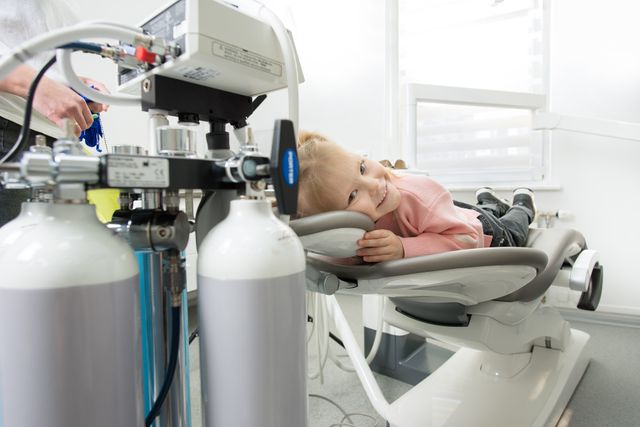
Most parents wait until their child has all permanent teeth before seeking orthodontic treatment. But age 6–10 — the mixed dentition phase — is actually the ideal window for interceptive treatment with Invisalign First.
When a parent brings their 7-year-old child in for an orthodontic check, they often expect to be told 'come back in a few years when all the adult teeth are in.' For most children, that's still the right advice. But for the 20–30% of children who have early developmental issues, waiting until age 12–13 can make treatment more complex, longer, and more expensive than it needed to be.
What is Invisalign First?
Invisalign First is a version of the Invisalign system specifically engineered for children aged 6–10 who still have a mix of primary (baby) and permanent teeth. Unlike standard Invisalign, it:
- Accounts for erupting teeth — built-in spaces allow permanent teeth to come in naturally during treatment
- Addresses jaw development — can guide the growth and width of the jaw arch, not just move existing teeth
- Uses softer, more flexible SmartTrack material — designed for children's comfort
- Has shorter treatment protocols — most Phase 1 treatments last 12–18 months
- Includes free replacement aligners — because children lose things
Why Early Treatment (Phase 1) Matters
Between ages 6–10, children's jaws are still actively growing and are far more responsive to orthodontic forces than adult bone. This creates a window of opportunity for interceptive treatment that closes permanently once growth is complete.
- Arch expansion is possible — widening a narrow jaw arch with aligners is easy at age 8; it requires surgery at age 25
- Crossbite correction is faster — skeletal crossbites that need surgical correction in adults can often be fixed non-surgically in children
- Habit correction — aligners help break thumb-sucking and tongue-thrust habits that are causing bite problems
- Reduces future treatment complexity — many children who have early treatment need only minor Phase 2 correction, or none at all
- Protects teeth at risk — crowded teeth that are erupting into the wrong position can be guided before causing damage to adjacent teeth
The American Association of Orthodontists and Indian Orthodontic Society both recommend a first orthodontic check by age 7. This doesn't mean treatment at 7 — it means assessment so that if early intervention is needed, it happens at the optimal window.
Which Problems Can Invisalign First Treat?
| Problem | Can Invisalign First Help? |
|---|---|
| Narrow dental arch (crowding risk) | Yes — expansion is the primary use case |
| Anterior crossbite (upper teeth behind lower) | Yes — very effectively at this age |
| Posterior crossbite | Yes |
| Thumb-sucking causing open bite | Yes — aligners discourage the habit |
| Spacing between baby teeth | Usually monitoring only |
| Severe skeletal jaw discrepancy | Requires specialist assessment |
| Crowded permanent teeth emerging | Often addressed with space management |
Is Invisalign First Better than a Palate Expander?
Traditional palate expanders (RPE — Rapid Palatal Expanders) are fixed appliances that look like a metal device glued to the roof of the mouth. They work, but they're uncomfortable, affect speech significantly, and make eating and oral hygiene very difficult.
Invisalign First achieves similar arch expansion results in most cases — but is removable, more comfortable, and has virtually no speech impact after the first 1–2 weeks. For many children, this is a genuinely better option than a traditional expander. Your orthodontist will recommend the right approach after a clinical assessment.
What Does Invisalign First Treatment Look Like?
- 1.Free consultation — clinical assessment of your child's bite, jaw development, and tooth positions
- 2.iTero 3D scan — a comfortable 5-minute scan (children love this step — they get to see a 3D model of their own teeth)
- 3.ClinCheck plan review — you and your child see the projected result before treatment starts
- 4.Aligner sets delivered — your child wears each set for 1–2 weeks
- 5.Check-ups every 6–8 weeks — shorter than braces, easier to schedule around school
- 6.Phase 1 completion — most Phase 1 treatments complete in 12–18 months
- 7.Retention and monitoring — retainers and periodic checks until Phase 2 (if needed) at age 11–13
Will My Child Actually Wear the Aligners?
This is the first question every parent asks. The honest answer: children aged 6–10 are often surprisingly good at compliance when they understand the treatment and are invested in it. Several factors help:
- Blue compliance indicators — the same fading dots used in Invisalign Teen, so parents can monitor wear
- Aligners are more comfortable than braces or expanders — children have less motivation to remove them
- Children respond well to being involved — we explain the treatment directly to the child, not just the parent
- Visual feedback — children love seeing the progress in their mouths
- Less social stigma than braces at this age — classmates often think aligners are 'cool'
Invisalign First Cost in Hyderabad 2026
Invisalign First at The Dental Specialists starts from ₹1,20,000. This is significantly less than adult Invisalign because Phase 1 typically requires fewer aligners and a shorter treatment series.
- Starting price: ₹1,20,000 (Phase 1 only)
- 0% EMI available: from ₹5,000/month
- Included: free consultation, iTero scan, ClinCheck plan, all aligners, all appointments, retainers
- Free aligner replacements: up to 6 sets included
- Phase 2 (if needed at age 11–13) is a separate treatment with its own cost