
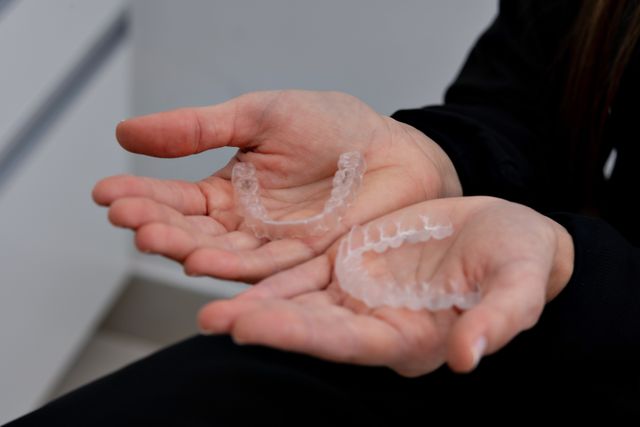
Eight myths about Invisalign that we hear at every consultation — and the real, evidence-based answers from our MDS specialist team.
In consultations every day, we hear the same hesitations. They usually come from something a friend said, a Google search that landed on a 2012 article, or simply the natural human resistance to anything new. Here are the eight myths we encounter most often — and the truth behind each one.
Myth 1: Invisalign Only Works for Minor Cases
This was partially true in Invisalign's early years (the 2000s), but technology has transformed what's possible. Today's Invisalign Comprehensive can treat:
- Severe crowding (teeth overlapping significantly)
- Class II and Class III bite issues
- Open bites and deep bites
- Underbites (with or without surgical assistance)
- Complex space management and arch expansion
- Post-surgical orthodontics
Our MDS specialist team at Banjara Hills have completed complex cases that would have been considered 'braces only' a decade ago. The SmartForce attachments system and precision bite ramps now allow forces that rival fixed appliances for most orthodontic tooth movements.
Myth 2: Invisalign is Painful
Truth: Aligners cause significantly less discomfort than braces. Most patients describe mild pressure for the first 2 days after each new aligner — which they say is less intense than the soreness after a braces wire tightening. No wires, no brackets, no emergency appointments for broken wires.
Myth 3: You Can Eat with Invisalign Aligners In
This is the one case where reality is slightly more demanding than people expect. Aligners must be removed for all food and drinks except cold water. Eating with aligners in stains and warps them. The good news: removal takes 2 seconds, and the discipline of removing aligners for every meal is something most patients adapt to within a week.
Life hack from our patients: keep a small travel kit (aligner case, travel toothbrush, mini mouthwash) in your bag or desk drawer. The routine becomes second nature within 2 weeks.
Myth 4: Nobody Can Tell You're Wearing Aligners
This one needs nuance. In ordinary social situations — across a meeting table, in conversation, in photos — clear aligners are genuinely nearly invisible. A dentist or orthodontist looking specifically for them will notice. Someone looking at your teeth at close range might notice a slight sheen. But in daily professional and social life, the vast majority of our patients report that nobody noticed throughout their entire treatment.
Myth 5: Invisalign Takes Longer than Braces
For the cases Invisalign is designed for, the opposite is often true. The digital precision of ClinCheck means there's no trial-and-error adjustment process. Treatment times for mild-moderate cases are typically 30–40% shorter with Invisalign than equivalent brace treatment.
Myth 6: Invisalign Treatment Needs Daily Dentist Visits
Appointments are every 6–8 weeks — less frequent than braces (every 4–6 weeks). Between appointments, patients manage their own aligner changes at home using the schedule provided. The Dental Monitoring app allows your orthodontist to see your progress remotely from smartphone selfies, further reducing clinic visits.
Myth 7: Your Teeth Will Shift Back After Invisalign
Teeth naturally want to move — this is true whether you've had Invisalign, braces, or no treatment at all. Post-treatment retention is essential for any orthodontic treatment. Invisalign includes Vivera retainers (made from 30% stronger material than standard retainers) and a clear aftercare protocol. Patients who wear their retainers as directed maintain their results long-term.
Myth 8: You Need to be Young to Get Invisalign
Our oldest Invisalign patient to date was 67. Orthodontic treatment works at any age as long as gums and bone are healthy. Adult Invisalign is not only possible — it's the majority of our practice. Adults often make better candidates than teenagers because they're more motivated and more compliant with wear.
The best way to separate myth from reality for your specific case is a free consultation. Your orthodontist can tell you exactly what Invisalign can and can't do for your teeth — based on actual examination, not general internet articles.